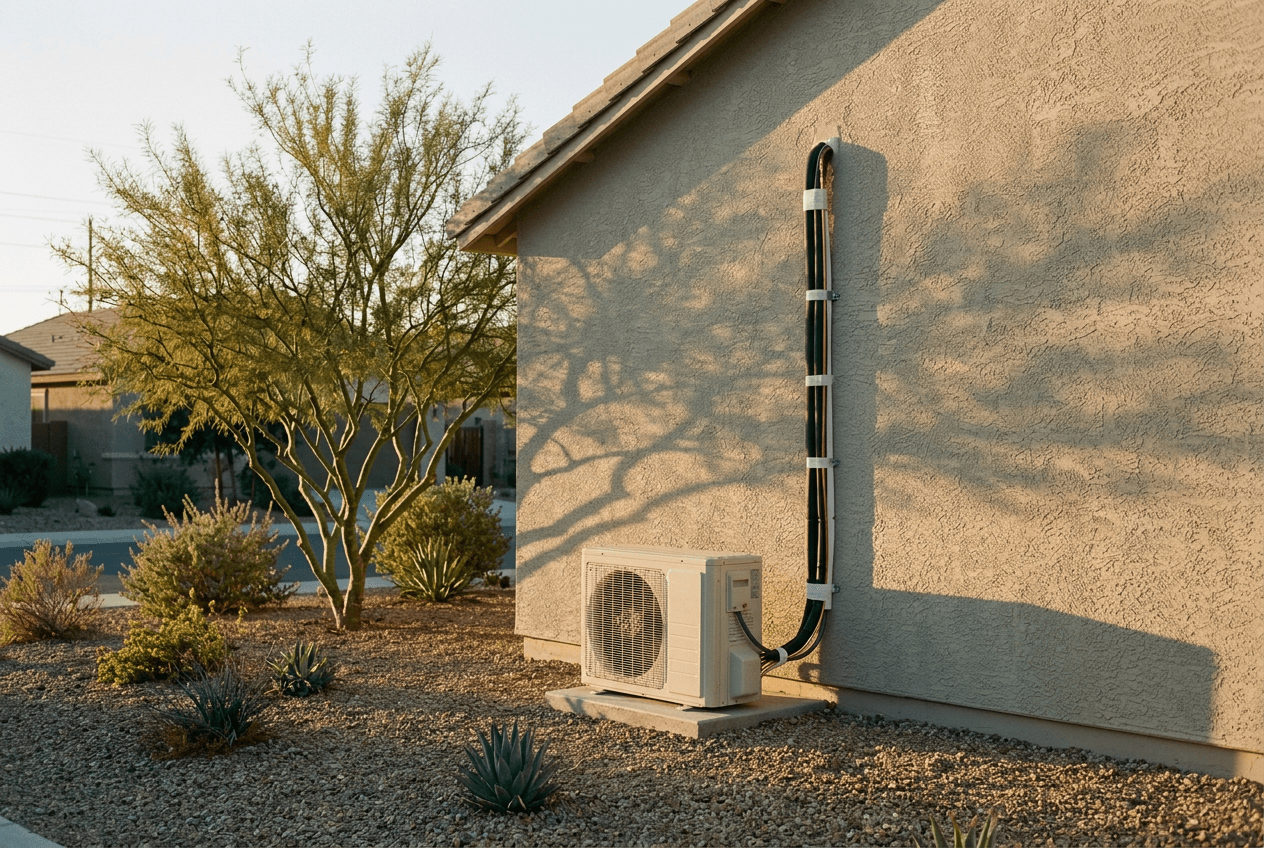
By the middle of a Phoenix summer, the garage is a room the family has quietly surrendered. The thermostat in the house holds a civilized number, but step through the door into the garage and the air changes — thick, close, ten or fifteen degrees hotter than outside, the kind of heat that turns a workbench, a home gym, or a teenager's would-be hangout into dead square footage for five months of the year. The Valley is full of these rooms: the converted casita that never quite cools, the addition the central system can't reach, the office over the garage that bakes by noon. They are the rooms a ductless mini-split was built to rescue.
That rescue is the specialty of Sapper HVAC, a veteran-owned company working out of Chandler and serving most of the Phoenix metro. The name is not decoration. A sapper, in military terms, is a combat engineer — the soldier who builds, clears, and solves problems under pressure, with precision, where there is no margin for sloppy work. It is an unusual brand for an air-conditioning company, and an apt one, because the difference between a mini-split that transforms a room and one that disappoints almost always comes down to the unglamorous engineering most installers are tempted to skip.
What a name like Sapper is meant to signal
Plenty of HVAC outfits will sell you a mini-split. Fewer treat the installation as an engineering job rather than a product drop-off. The distinction matters more than a homeowner might guess, because a ductless system is deceptively simple to install badly — bolt a head unit to the wall, set the condenser outside, charge the line, and walk away. It will blow cold air. It will also, if it was sized wrong or installed carelessly, short-cycle, run up the power bill, and leave the room it was supposed to fix never quite comfortable.
The veteran-owned framing isn't just marketing texture, either. It shows up in the way the work is described — clean, code-compliant, done the way it is supposed to be done rather than the fast way. In a trade where a lot of companies compete on how quickly they can quote and how cheaply they can close, leaning on discipline and craftsmanship is a deliberate position. It asks the customer to value the parts of the job they will never see over the price on the first page of the estimate. For the rooms a mini-split is meant to save, that is usually the right trade.
Why Phoenix is rediscovering the mini-split
Ductless mini-splits are not new, but their moment in Phoenix is. The appeal is specific to how people actually use their homes here. Central air conditioning cools the whole house on one thermostat, which is wasteful when the problem is a single room — the garage, the casita, the sunroom, the converted office — that the main system was never sized to reach. A mini-split puts cooling exactly where it is needed, on its own controls, without the cost and disruption of extending ductwork that may not exist.
The efficiency math is the other half of the story. A modern ductless system is a heat pump, which means it both cools in summer and heats on the rare Valley cold snap, and it does so without the duct losses that bleed efficiency out of a traditional system. For a homeowner watching a summer electric bill climb past comfort, cooling one frequently used room with a high-efficiency unit instead of overworking the central system to chase it is the kind of change that pays for itself. That is the case Sapper HVAC makes, room by room, across the Phoenix metro.
The sizing math most installers skip
Ask a careful HVAC contractor what most often goes wrong with a mini-split, and the answer is rarely the equipment. It is the sizing. A unit that is too small never catches up to a hot room; a unit that is too large cools fast, shuts off, and cycles on and off all day, which wears the equipment, wastes energy, and never properly removes humidity. Getting it right requires a Manual J load calculation — an industry-standard method of measuring exactly how much heat a specific room gains, accounting for its windows, insulation, orientation, and square footage.
It is also the step that is easiest to fake. Plenty of installers eyeball the room and reach for whatever tonnage is on the truck. Doing the actual calculation takes time and expertise, and it is invisible to the customer, which is precisely why it gets cut. Treating that load calculation as non-negotiable is the clearest expression of the engineering mindset behind the Sapper name. The right-sized system is quieter, cheaper to run, and longer-lived — and the homeowner never sees the math that made it so. They only notice that the room, finally, is comfortable.
Clean, code-compliant, and hidden from view
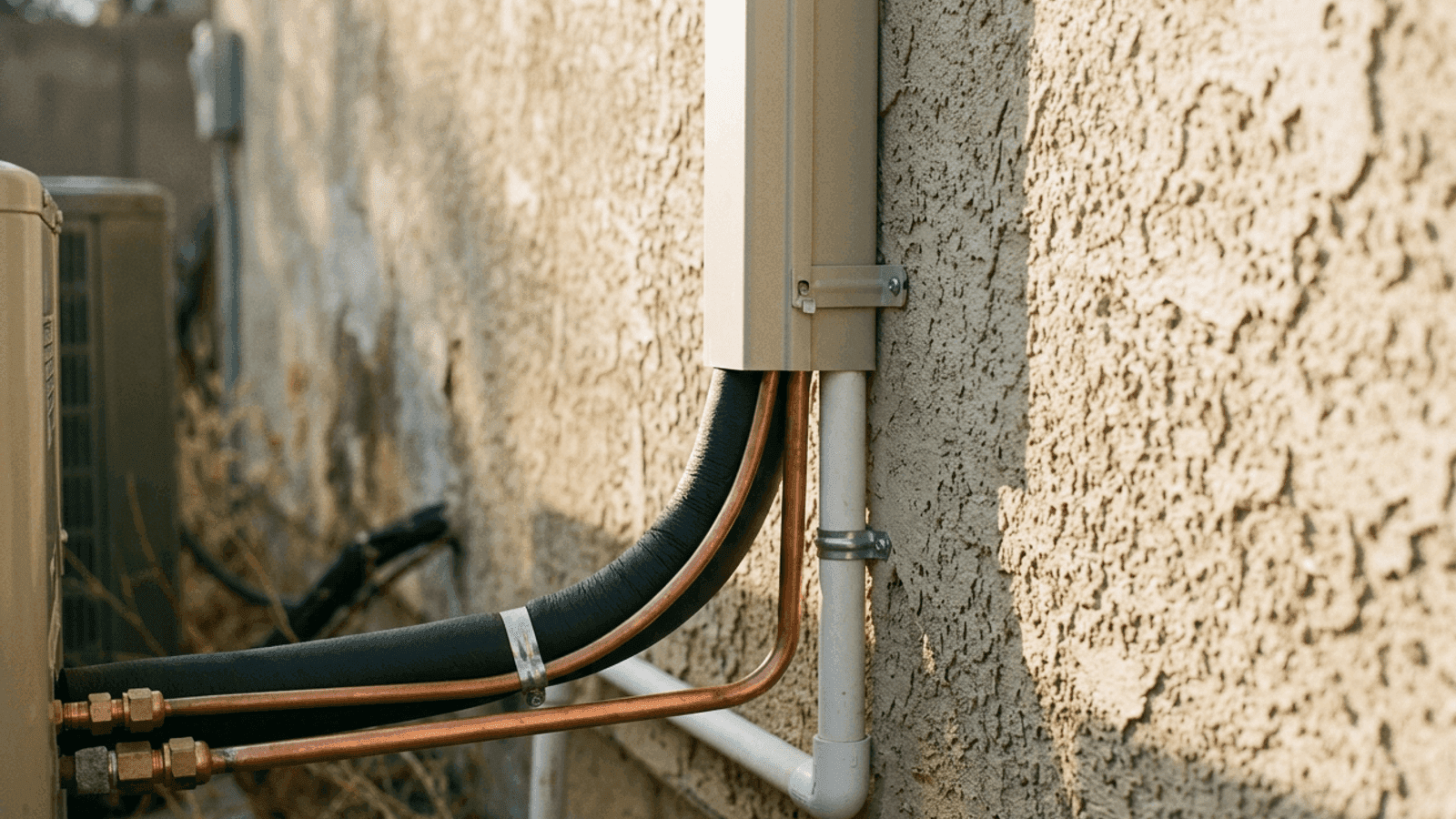
The other half of a good ductless install is what it looks like when it's finished. A mini-split involves an indoor head unit, an outdoor condenser, and the refrigerant line set, drain, and wiring that connect them — and how those runs are handled is the difference between an installation that looks intentional and one that looks like an afterthought stapled to the side of the house. Sapper HVAC leans on clean, concealed line runs, including routing them through drywall where the layout allows, so the finished job reads as part of the home rather than an appliance bolted on.
Code compliance sits underneath all of it. Electrical work done to spec, proper breakers and disconnects, correct condensate handling, permits where they are required — the parts of the job that a homeowner cannot evaluate and an inspector can. This is where the warranty conversation matters, too: backing labor as well as equipment signals a company that expects its work to hold up. For a system meant to run hard through Phoenix summers for a decade or more, the workmanship behind the wall is the part most worth paying for.
This guy shows up when he says he's going to, does excellent work and clean up. We are so happy with our new install.
More than mini-splits
The ductless work is the calling card, but Sapper HVAC runs the full scope of the trade. Central air conditioning installation and replacement, heat pumps, heating systems, and the day-to-day repair and maintenance work that keeps a Phoenix home livable all fall inside what the company does. When an AC stops cooling in July, the diagnosis-and-repair side of the business is as much a part of the job as the showpiece installs, and the same standards apply whether the work is a full system swap or a failed capacitor.
That range matters for a homeowner choosing who to call. A company that only chases new installations has little reason to invest in the unglamorous repair relationship; one that does both is the number a household keeps on the refrigerator. It also means the advice a customer gets is less likely to be one-size-fits-all. Sometimes the right answer is a mini-split for a single problem room. Sometimes it is repairing what's there, or replacing an aging central system. A full-service shop can make that call honestly because it can do all three.
Built for the Phoenix grind
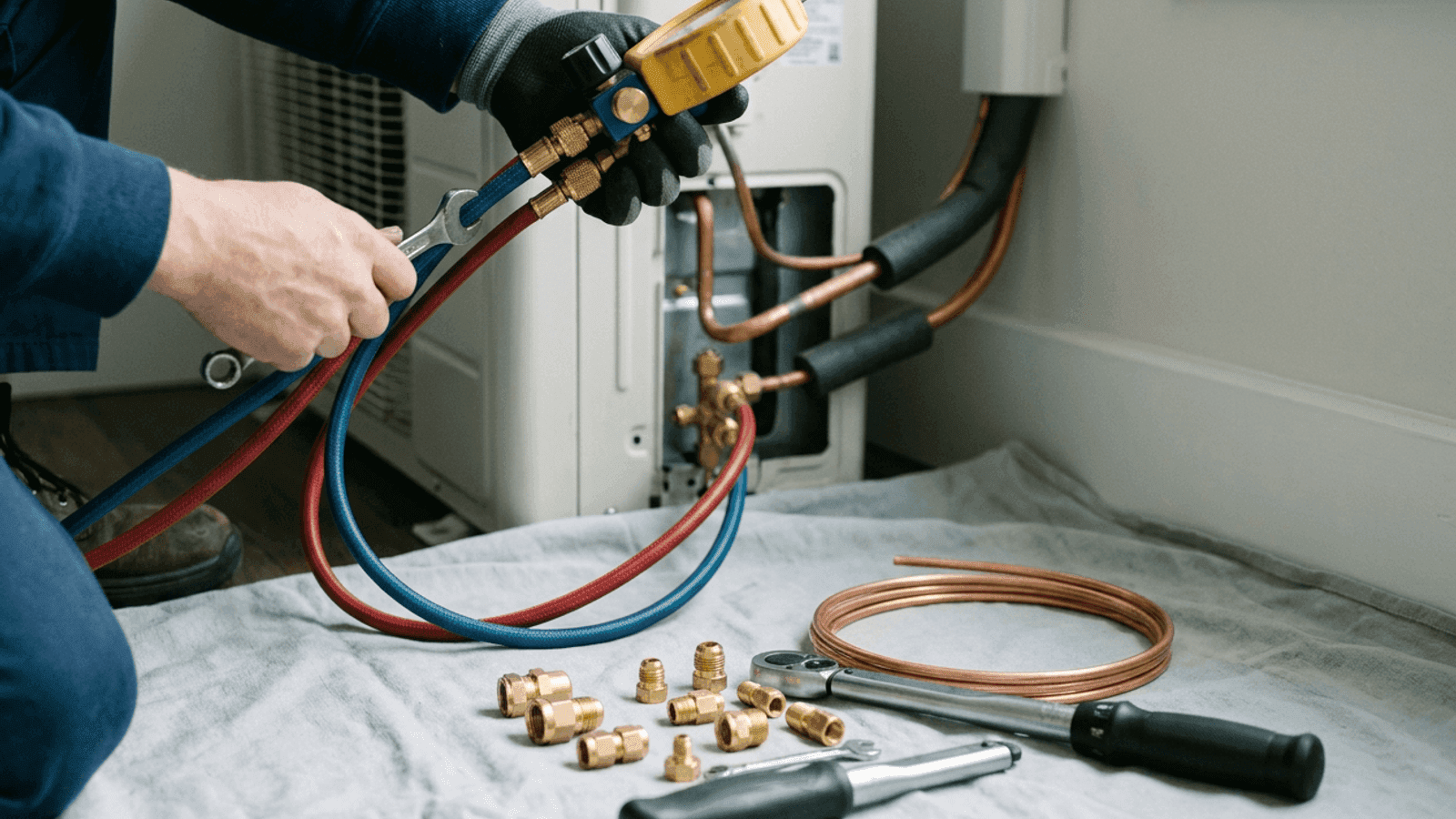
Few climates ask more of an air conditioner than the Sonoran Desert. A system here runs for the better part of the year against outdoor temperatures that routinely top 110 degrees, and the equipment that survives that grind is the equipment that was sized, installed, and maintained correctly from the start. Energy efficiency is not an abstraction in Phoenix; it is a line on a summer utility bill that can shock a new homeowner. The argument for a high-efficiency ductless system, or a properly matched central one, is at its strongest precisely where the heat is at its worst.
This is the backdrop against which Sapper HVAC's emphasis on doing the engineering correctly stops sounding like a slogan and starts sounding like economics. A unit that short-cycles in a Minneapolis spring is a minor annoyance; the same mistake in a Chandler July is a system working itself to death and a bill to match. Getting the sizing, the charge, and the installation right is how a system survives the desert — and how it keeps cooling without quietly bleeding money for the years it's supposed to last.
Serving the Valley, and the people who served
Sapper HVAC's footprint runs across the Phoenix metro — from its Chandler base out through Gilbert, Mesa, Tempe, Queen Creek, Scottsdale, the West Valley, and dozens of communities in between. It is a wide service area for a company that competes on craftsmanship rather than volume, and it reflects how portable the core work is: a room that needs cooling is the same problem whether it sits in Peoria or Apache Junction.
The veteran identity shows up off the clock, too, in a giveaway program aimed at giving back to other veterans — a small, concrete way the company's roots reach past the work itself. For a business named after the combat engineers who clear the way for everyone behind them, the gesture fits. It is of a piece with the broader pitch: that the people doing the work, and the standards they hold themselves to, are the actual product, and the equipment is just what they install.

What to expect when you reach out
The first conversation with a careful HVAC company should feel less like a sales pitch and more like a diagnosis. For a mini-split, that means an assessment of the actual room — its size, its exposure, how it's used — rather than a number pulled from the air, followed by an honest recommendation about whether a ductless unit, a repair, or a different system is the right answer. Customers describe the experience in plain terms: technicians who show up when they say they will, work cleanly, and leave the space better than they found it.
Same-day availability and round-the-clock emergency support mean the company is reachable when a system fails at the worst possible moment, which in Phoenix is most of the summer. But the throughline in what people say about Sapper HVAC is less about speed than about trust — the sense that the crew did the job right, explained what they were doing, and stood behind it afterward. In a trade where a homeowner is rarely equipped to judge the work directly, that reputation is most of what they are actually buying.
The case for getting it right the first time
A mini-split, installed well, is one of those rare home upgrades that quietly overdelivers — a hot, unusable room turned comfortable, a power bill that stops climbing, a system that runs for years without drama. Installed poorly, it becomes a different kind of fixture: the unit that never quite cools, the line set that looks like a mistake, the equipment that wears out early. The gap between those two outcomes is almost entirely the work that happens before and during the install, not the box on the wall.
That is the whole argument behind a company like Sapper HVAC — that in a trade defined by the parts you can't see, the discipline to do them right is the product. For homeowners across the Valley staring at a garage they've written off or a summer bill they can't explain, the veteran-owned crew in Chandler is reachable at (602) 206-7359, and the pitch is a simple one: get it right the first time, and the room takes care of itself.