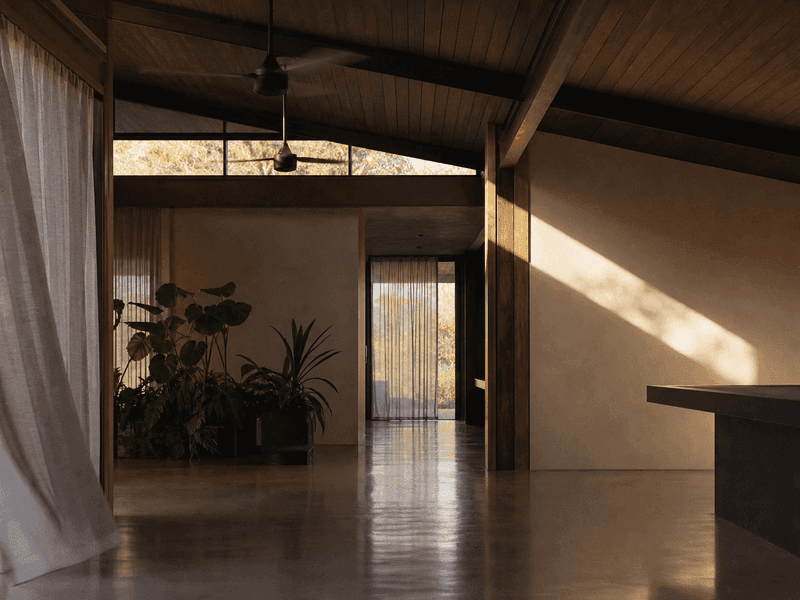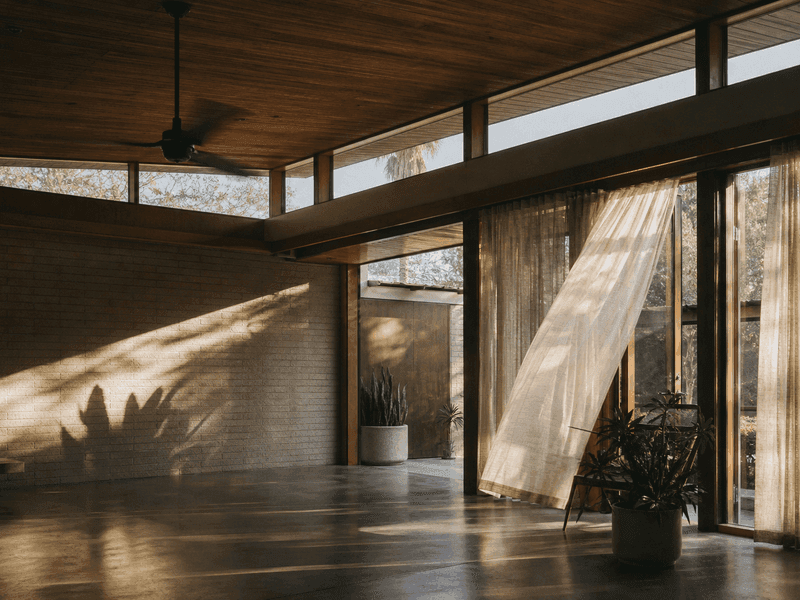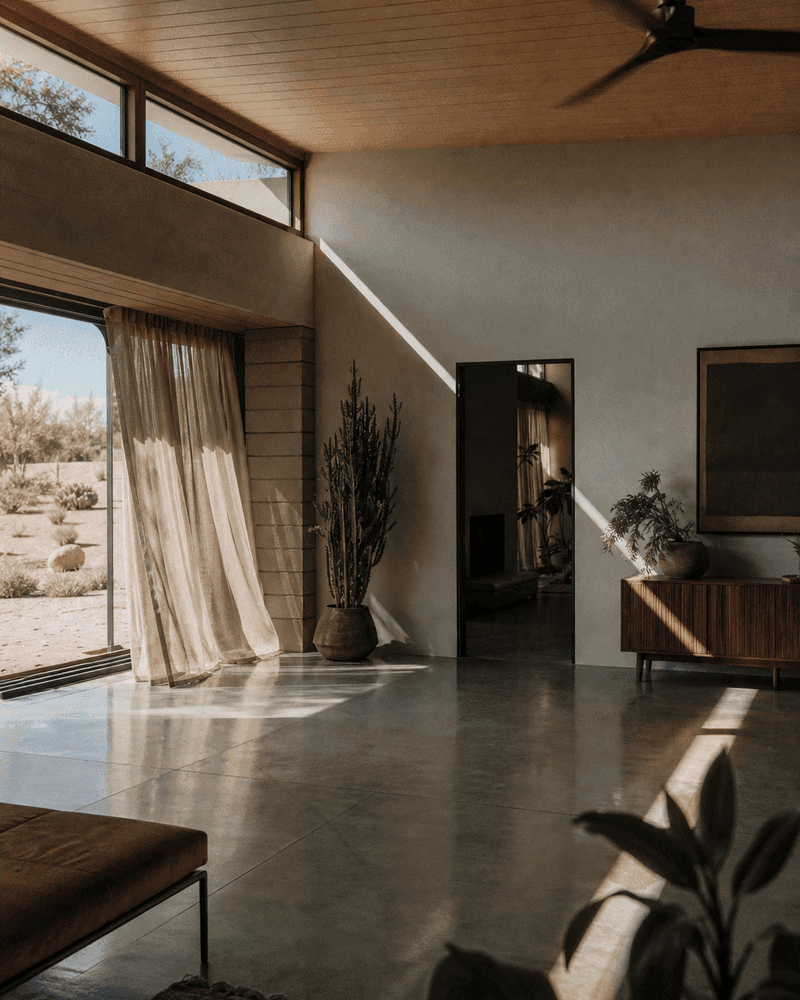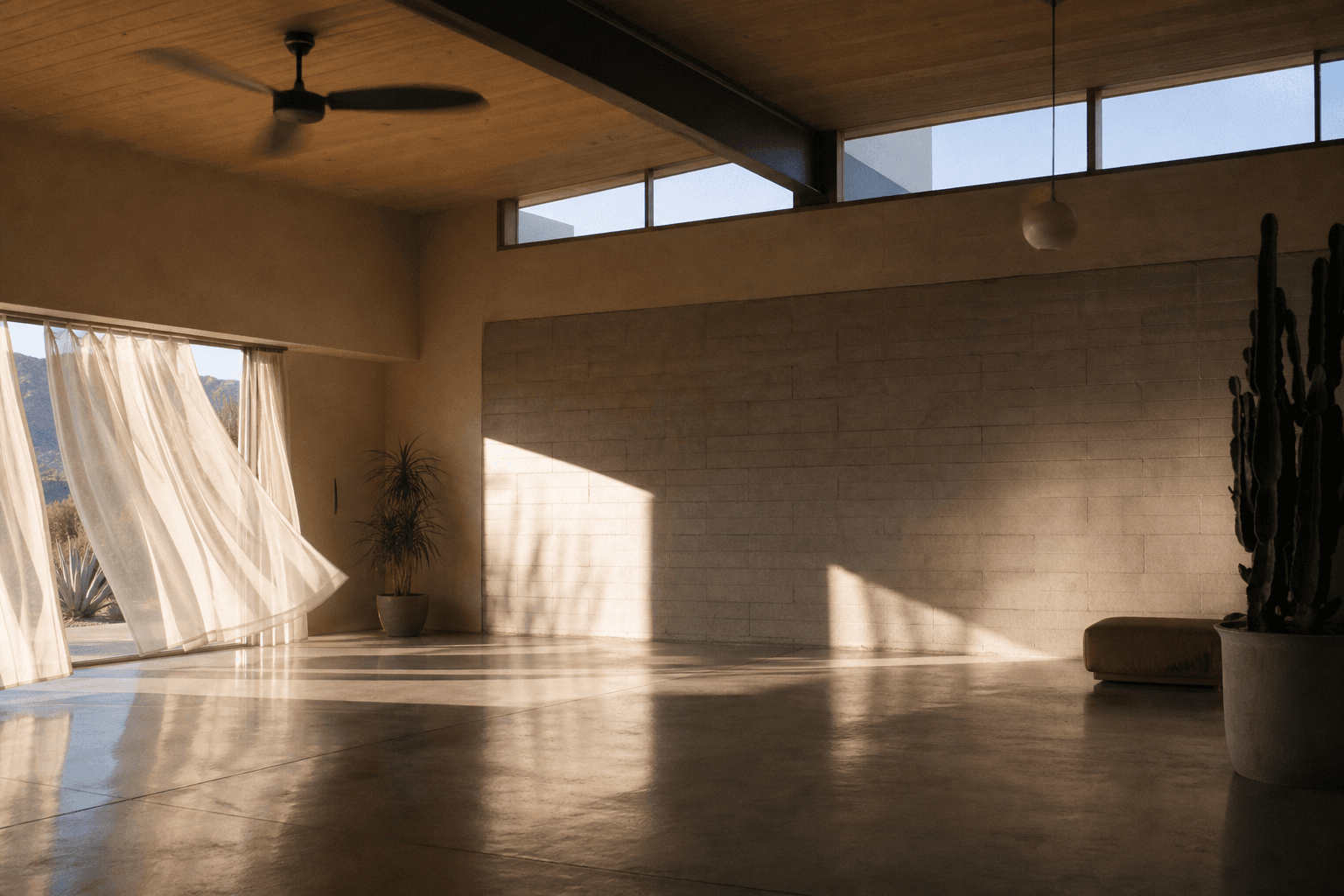
More than 4,200 Phoenix metro listings described themselves as 'desert-modern' last year. The term has become a color palette. If the house is tan with a flat roof and a rammed earth panel near the front door, it qualifies. What it no longer necessarily means is that anyone thought carefully about solar orientation, thermal mass placement, or how much cooling equipment the building will require to make the interior livable.
01What Desert Modernism Was
The vernacular architecture of the American Southwest developed specific solutions to a specific climate. Adobe and rammed earth construction worked because these materials have high thermal mass. They absorb heat slowly during the day and release it slowly at night, moderating interior temperatures without mechanical help. Deep overhangs blocked high summer sun while admitting lower-angle winter light. Small windows on south and west exposures minimized solar heat gain. These were functional responses to real constraints, and they gave the buildings their look.
Architects working in Arizona in the mid-20th century brought those principles into a modern vocabulary. The look was distinctive partly because the function was distinctive. The buildings were designed for the climate, and the climate shaped the form.
02The Glass Problem
The most common failure in contemporary desert-modern is glass. A wall of glass facing southwest looks spectacular in a rendering. In practice, it generates enormous solar heat gain from early afternoon through sunset, overwhelming the HVAC system and creating a greenhouse effect that no amount of interior shading can fully address. A well-designed desert home minimizes west and southwest glazing, maximizes roof overhangs, and places glass primarily on north and east elevations where light quality is better and heat gain is manageable.
In the homes built across North Scottsdale and Paradise Valley, the glass situation is frequently the opposite of what good solar design would prescribe. The buyer wants the view. The view is to the west. The architect delivers the view. The mechanical engineer adds tonnage. The homeowner runs the air conditioning nine months a year.
The aesthetic has become its own category, disconnected from the principles that gave it a reason to exist in the first place.
03Rammed Earth and Other Expensive Gestures
Rammed earth construction, done correctly, provides genuine thermal mass and a distinctive visual quality. It costs significantly more than conventional framing. On a properly oriented home with the right window strategy and ventilation plan, it earns its cost. On a conventionally framed house with poor solar orientation, a rammed earth accent wall near the entry is an expensive decorative choice. It does not meaningfully change the building's thermal performance.
The same logic applies to polished concrete floors, another desert-modern staple. Thermal mass works by cycling through temperature swings: absorbing heat during the day, releasing it at night. In a home running continuous air conditioning, that cycling never happens. The concrete just stays cool and costs more to install than tile.
04What the Good Examples Have in Common
The Arizona homes that actually function as desert architecture share specific properties. The long axis runs east-west. Roof overhangs are calculated for the latitude rather than chosen for their visual profile. Glazing is concentrated on north and east exposures. Mechanical systems are sized for a well-designed envelope, not compensating for a poorly designed one.
These homes tend to be architect-designed customs in the $2 million and above range, where the client is paying for performance rather than for photographs. The builders who dominate the luxury tract market use the desert-modern aesthetic because it sells in this market. They are not wrong to use it. They are wrong when the aesthetic is all there is.
There are architects in Arizona building genuinely good desert homes right now. Most of them are not the ones in shelter magazine spreads. The aesthetic has outrun the practice, and the market rewards the look more reliably than it rewards the thinking. Sources: azsolarcenter.org, passivehouseaccelerator.com, desertdesignweek.com