Pickleball is the fastest-growing sport in America and Arizona has embraced it with the enthusiasm of a market that understands outdoor recreation and already has the infrastructure. The question being asked at private clubs across the Valley in 2026 is not whether to offer pickleball but how much of the existing racket sports footprint to convert to accommodate it.
01The growth numbers
The Sports and Fitness Industry Association reported that pickleball participation in the United States grew from roughly 3 million players in 2018 to over 36 million by 2023. The sport has expanded fastest among two demographics that have significant representation in Arizona: adults over 55 who are looking for competitive athletic activity with lower joint impact than tennis, and adults under 35 who are attracted to the social and competitive culture of the game.
Arizona, with its year-round outdoor playability and population of active retirees, is among the five fastest-growing pickleball markets in the country by participation rate. Phoenix and Scottsdale have more dedicated outdoor pickleball courts per capita than comparable-sized Sunbelt markets.
02What private clubs are doing
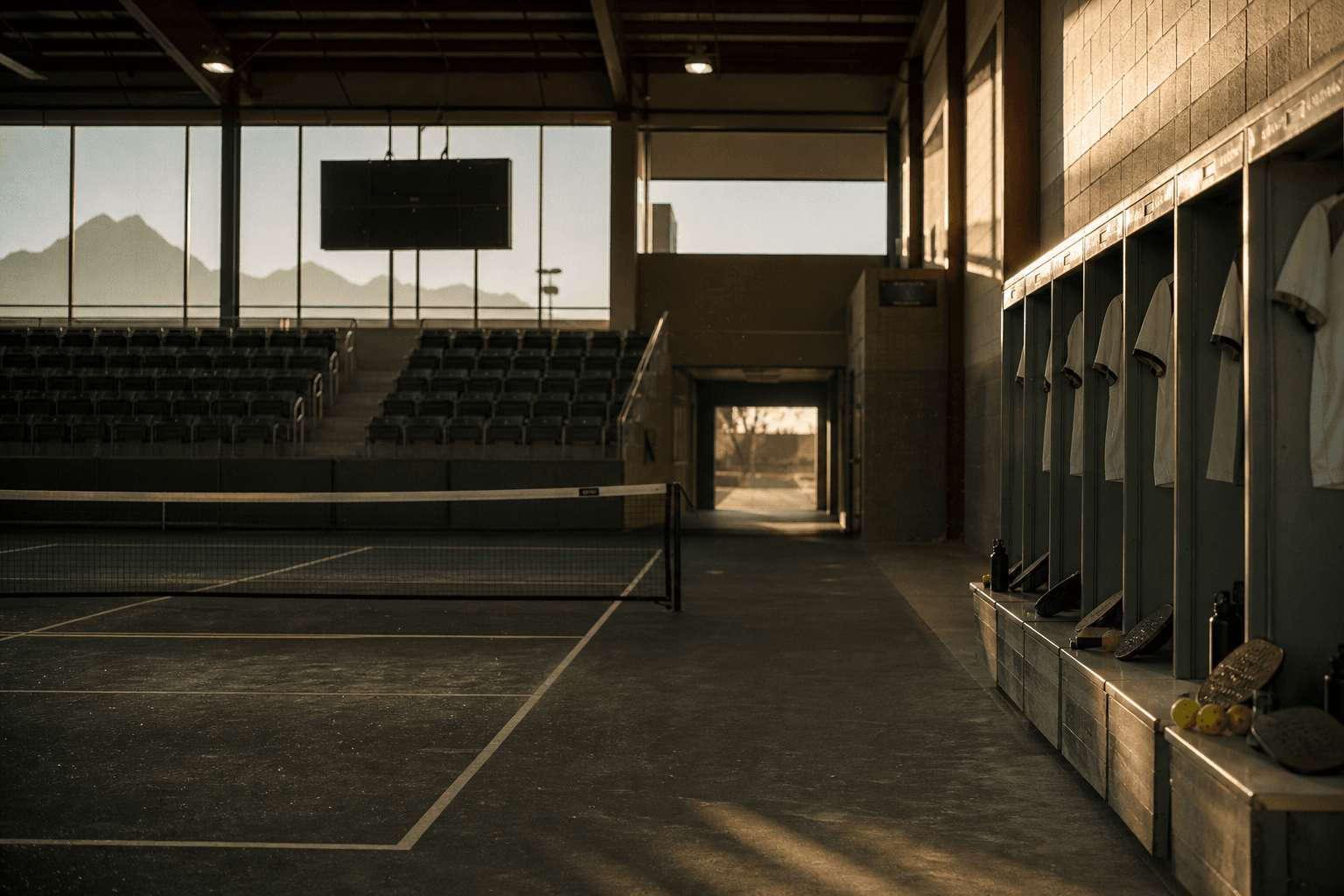
The arithmetic of court conversion is straightforward: one standard tennis court can be converted to four pickleball courts. At clubs where tennis courts sit at 40 to 60 percent utilization and pickleball demand has wait lists, the financial case for conversion is compelling. The Gainey Ranch Golf Club, DC Ranch Club, and several other Scottsdale private facilities have converted portions of their racket sports facilities over the past three years.
The politics of conversion are less straightforward. Tennis members at established clubs have organizational cohesion and historical standing. Pickleball converts tend to be newer members or prospects. The internal debate at private clubs about how many tennis courts to protect has become one of the more contentious governance questions in the membership club industry.
Tennis people are upset. Pickleball people are growing. The clubs that thread this needle are adding new pickleball courts without eliminating tennis, which requires either building new facilities or finding underutilized land on the property. Not everyone has that option.
03Dedicated pickleball facilities
The most significant development in Arizona's pickleball infrastructure has been the emergence of dedicated private pickleball clubs that are not attached to golf or tennis facilities. Chicken N Pickle, the entertainment-pickleball hybrid format, opened in the Phoenix area and generated demand data that surprised the fitness industry with its volume. Several purpose-built premium pickleball facilities have followed.
Membership structures at dedicated pickleball facilities run considerably lower than traditional golf or tennis club memberships. Monthly memberships at premium AZ pickleball clubs run $100 to $250 per month with no initiation fee, compared to golf club initiation fees of $35,000 to $350,000. The accessibility price point has been central to the sport's growth trajectory.
04The competitive circuit
Arizona hosts several professional pickleball events on the APP Tour and PPA Tour circuits. The Phoenix Open Pickleball Championship draws professional players and significant spectator attendance. The presence of professional events creates a performance pathway that recreational players identify with and aspire toward, similar to how the PGA Tour's Scottsdale presence has built golf culture in the region.
Amateur tournament play in Arizona is organized through the USAPA Arizona district and through independently run club tournaments at private facilities. Competitive players at the 4.0 and above rating level are increasingly choosing club membership based on access to high-quality competitive leagues rather than facility aesthetics.
05What to look for in 2026
The Arizona pickleball market in 2026 is past its early-adopter phase and into the infrastructure investment cycle. New dedicated facilities are opening quarterly. Existing private clubs are finalizing conversion decisions. The APP Tour and PPA Tour merger discussions, which have been ongoing, will shape whether Arizona maintains its current event schedule or consolidates around fewer marquee events. For players choosing where to invest membership dollars, the distinction between clubs with serious competitive leagues and clubs using pickleball as a retention amenity has become meaningfully clear.