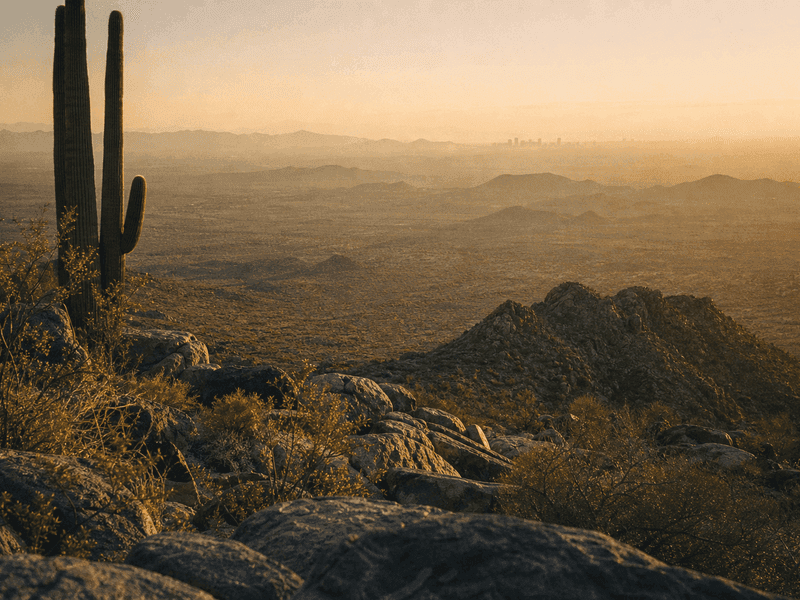
Camelback Mountain received roughly 500,000 hikers in 2015. By 2023, the number had grown to over 1 million. The trail system, two routes totaling roughly 2.5 miles of maintained path, has not changed. The parking lot still holds 97 cars. The gap between demand and infrastructure is not a planning oversight. It is an illustration of how quickly Arizona's trail network was overwhelmed by population growth and a pandemic-era outdoor recreation surge that permanently raised baseline visitation.
01The scale of the problem
Camelback is the highest-profile example but not the only one. Piestewa Peak in Phoenix's Mountain Park Reserve, South Mountain Park, and the McDowell Sonoran Preserve trail network in Scottsdale all experienced visitation increases of 60 to 100 percent between 2019 and 2023. Trailhead parking lots that were occasionally full on peak spring weekends became routinely full by 7am from November through April.
The consequences of overcrowding extend beyond parking frustration. Trail erosion accelerates when foot traffic volume exceeds the soil compaction threshold that trail builders design for. Flash flooding risk increases when trails are widened by hikers walking beside eroded sections. The experience quality that drives repeat visitation declines when the trail feels more like a sidewalk on a busy street than a desert escape.
02How Phoenix and Scottsdale are responding
The City of Phoenix implemented a timed entry reservation system for Camelback Mountain in 2020 during the pandemic and has maintained variants of it since. Reservations are required during peak weekend hours from November through April. The system has been controversial, with recreational hikers who favor spontaneous access objecting to the bureaucratization of public trails and preservationists arguing that some form of demand management is necessary.
Scottsdale's McDowell Sonoran Preserve, with its much larger trail network, has taken a different approach. No reservation system exists, but significant investment in new trailheads, parking expansion, and wayfinding has distributed visitation more effectively across the preserve's 225-plus miles of trails.
The trail infrastructure was built for the population Arizona had twenty years ago. We're not going to build our way out of this at the most popular peaks. Demand management is part of the answer whether people like it or not.
03Where to go instead
The Phoenix Mountains Preserve north of Camelback includes several trails that see a fraction of Camelback's traffic while offering comparable desert terrain. The Perl Charles Memorial Trail, the National Trail at South Mountain, and the Pemberton Trail loop in McDowell Sonoran Preserve provide genuine wilderness experience at lower crowding levels.
Farther afield, the Superstition Wilderness east of Mesa, the White Tank Mountain Regional Park in the West Valley, and the Four Peaks Wilderness northeast of Fountain Hills offer serious hiking terrain with dramatically lower visitor density than the Valley's urban trailheads. The transportation time is real, but the experience differential justifies it for hikers who are serious about the activity.
04Safety and the crowd dynamic
Arizona heat requires all hikers to start early and carry more water than feels necessary. This wisdom is true regardless of whether a trail is crowded. What crowding adds is a false sense of security. Seeing hundreds of other hikers on Camelback on a Saturday in March creates a perception that the trail is managed and safe at any hour. It is not. The medical calls on Camelback peak in late morning when hikers who started at 9am find themselves exposed at the summit approach in direct sun with their water supply depleted.
Search and rescue operations on Arizona trails have increased proportionally with visitation. The Maricopa County Sheriff's Office conducts roughly 400 search and rescue operations per year in the Phoenix metro area. Most involve hikers who underestimated heat, ran out of water, or attempted technical terrain without appropriate preparation.
05The etiquette shift
Arizona's trail culture is negotiating a transition from a local resource used by a community with shared norms to a tourist attraction with visitors who have no prior hiking experience and no ambient knowledge of desert conditions. Trail ambassadors, volunteer programs now operating at Camelback and several preserve entrances, provide the real-time education that trail signs cannot fully deliver. The programs are underfunded relative to the need. They are also among the most effective interventions available in the short term, while longer-range infrastructure investments work through the planning and budget cycle.